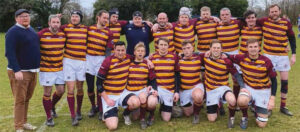
Feature Story: Cyril Springer
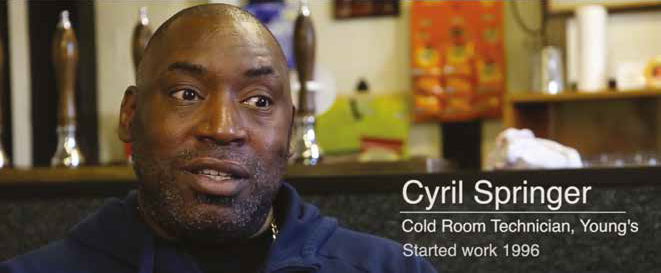
Cold Room Technician at Young’s Brewery
Q1: Did you have any family connections in the brewery?
CS: No, only my good friend Joey Toner (OW) was working there at the time. We played rugby together at Battersea Ironsides at the time. I applied for the vacancy, had an interview and got the job.
Q2: When you started what did you think about the place and especially the smells?
CS: I was used to the smells, the hops, horses, because I lived in the Wandsworth area all my life. But when I started working at Young’s you couldn’t have imagined that so much was going on in such a small space. Once you were within the walls and walked around, I thought … wow, how are they getting away with this, it was like … how can I say … controlled mayhem, but it worked!
Q3: When did you work at Youngs?
CS: I worked at Young’s Brewery for ten years. I started in 1996/97 and left around 2006.
Q4: What jobs did you do at the brewery?
CS: My first job was in the warehouse, driving a forklift truck. I used to load and unload the lorries that came into the yard before going out again to deliver to the pubs. We restocked daily and also supplied other brands of bottled beers to our pubs. We had a few mishaps with falling bottles and barrels, but they were very rare to be fair.
Q5: How many were on the warehouse team?
CS: In the warehouse there were around two or three people along with a checker. I think we had four to five checkers in all, and their job was to make sure you got the right product on the right lorry. Later, an internal job was advertised to work in the cold rooms … I applied and got the job.
Q6: What was it like in the cold rooms?
CS: Working in the cold rooms where the temperature was kept to below zero were very uncomfortable conditions. But we did have all the gear such as insulated waterproof boots and ski jackets. You needed a solid knowledge to work in the cold rooms, and it took around two years training to fully understand the job before you could be considered competent. There were nine people working in this part of the production. I had to go on several courses to keep on top of the job, as we were dealing with many dangerous chemicals such as strong acids for cleaning the pipes and tanks. Health and Safety issues were an important part of working in the cold rooms and risk assessment were high on the list. The Youngs management team were good because they provided us with whatever was needed, like bigger and better keggers, filters and blenders to make the job safer. The last job I had at the brewery was working with a drayman as a ‘driver’s mate’. We went out delivering to five pubs in the morning before returning back to the yard. We would then reload to deliver to another three pubs in the afternoon.
Q7: So again, you were learning a new skill?
CS: Yeah, too right, you were flipping kegs off the side of a lorry, getting them into a pub, sometimes with very low ceilings, using the old yellow skids to move the barrels. Some of the gantries were rickety, so you had to rope down the barrels of bitter. They were stacked three high and a few feet wide so you had to rope’em together. You’re standing there on this wooden platform, and you can hear it creaking and you’ve got your mate at the bottom … just imagine if you let it go! (laughs), so you have to hold on to it and slide the barrels down!
Q8: Did you have any mishaps delivering the kegs of beer?
CS: Yeah, I was working with my mate Dave, who was in the cellar of a pub sending up the empties. We used to stack them three high, and as I grabbed two kegs and span around, I’ve accidentally knocked one down. At the time I really didn’t think about it, and then I heard, ”Oi Cyril”, that’s when I realised I’d knocked Dave on the head with the keg. There was blood everywhere! Another guy Alex, who was also working with us, was on the floor crying with laughter, even though I’d nearly killed a man! Was it funny? Well, that’s what it was like. You knew he was alright. He went home, and we didn’t see him for a couple of weeks.
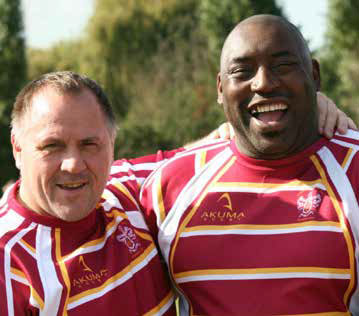
representing the Old Dubs.
Q9: What was the hub of the company?
CS: The canteen was the melting pot of the company. You would go for your breakfast and everyone was in there. We had some great characters working at Young’s at the time, but you just let them get on with the banter and not get involved. When you’re new you think, I’ll just sit back and listen, although I knew a few people, you didn’t want to give it the ‘big-un’ because you’ll get slapped down pretty quickly.
Q10: What about organised sports?
CS: Youngs and other breweries like Fullers and Coors had a great sporting programme. We played football and also rugby at Twickenham with a side made up of Battersea Ironsides and Old Wandsworthians. However, cricket was special and we played 20/20 before it was a recognised game! We also competed in a 7-a-side tournament put on by Coors at Lords.
Q11: What about the perks of the job?
CS: We probably got a bottle of whiskey and two bonus cheques at Christmas, maybe a turkey and a couple of tickets to watch the Harlequins.
Q12: Was there any beer drinking on the job?
CS: There was a bit of drinking on the job, but not much. In fact, if there was a member of staff with a drinking problem, the brewery wouldn’t just sack that person, they would try to help them with counselling and rehab to get them clean. The company were good in that way.
Q13: Were the horses still at the brewery when you were there?
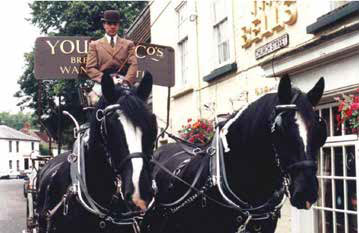
CS: Yes, there were stables at the brewery, we used to feed the horses mints. John Young (Owner) loved his horses and when you saw the dray horses pulling the carts loaded with beer out of the yard, wearing their highly polished bridles and harnesses, it made you very proud to be a part of the team.
Q14: What was the hierarchy at Youngs like?
CS: To be honest, the management on the whole were made up of top people. No matter where you worked, the management would always make time for you and it’s something I have taken away with me. The owner John Young was a great man. I can say that I thoroughly enjoyed working at Young’s Brewery.
Q15: I heard you were Chief Shop Steward at Youngs for some years, how did this come about?
CS: Well, you could say I got shanghaied into the position because I was outspoken and the other previous bloke wasn’t doing much. Once I got appointed into the position I used to meet with the directors at board level and negotiate worker salaries and improved conditions. I remember they threw in a question about pensions once and I didn’t know much about it, so we adjourned the meeting. A mate of mine from rugby whose wife was an expert in the field, gave me the heads-up on the subject. When I went back to work, I confronted the board with what I knew and they were so impressed that changes were made.
Q16: What happened when you heard the brewery was closing?
CS: We knew it was closing and it was sad, but that’s life! The good thing was that Youngs put £50,000 aside to help retrain and assist their staff to get new jobs once Youngs closed. It was tough for people who had been there for a large proportion of their working lives. They used to say that you only left Youngs if you got sacked (which was very rare) or they carried you out in a box! That’s something you only get once in a lifetime … if you’re lucky. Finally, the finished product we produced was first-class. The gassing of beers with the right CO2 levels, the smell and clear look of the beer in the glass helped the brewery win many awards. It was great to be a part of that company.
The above Interview was adapted by Chris Brown from the ‘Youtube Brewery Stories’.
You can find the full story at: https://www.youtube.com/watch?v=wqnNJ3IsAkA.